
Training is where containment happens.
Boundary training for dogs and puppies.
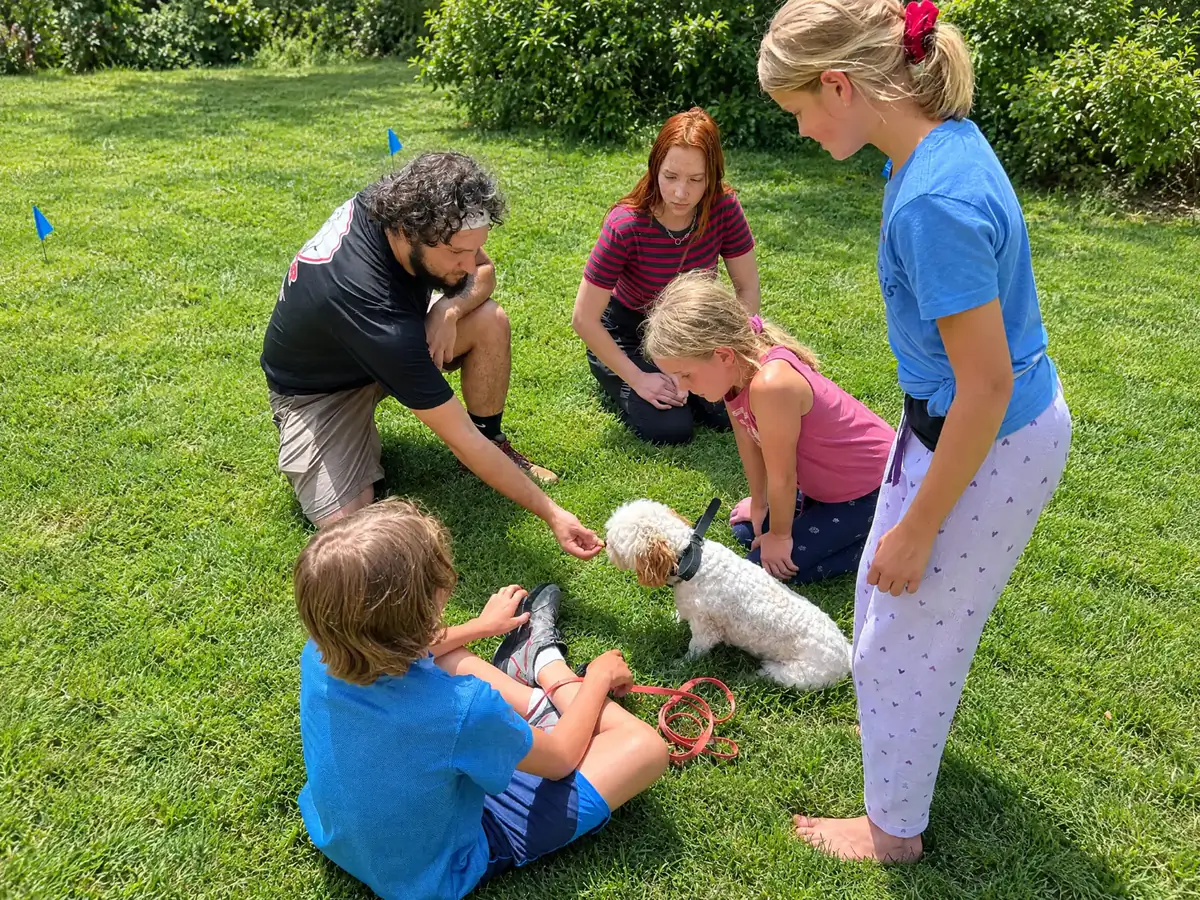
The wire and the collar are only half the system. The other half is a progressive training sequence that teaches your dog where the boundary is and what to do about it. It comes with every installation. Most dogs are trained within about 7 days, and your dog sets that pace. For a full year afterwards, if training gives you trouble, we come back out and help at no charge.
The progressive sequence
The boundary training stages, in order.
Each stage builds on the one before it, and your dog sets the pace inside each one. Skipping ahead is how boundaries fail, so the stages run in order.
- 1
Flags and the warning tone
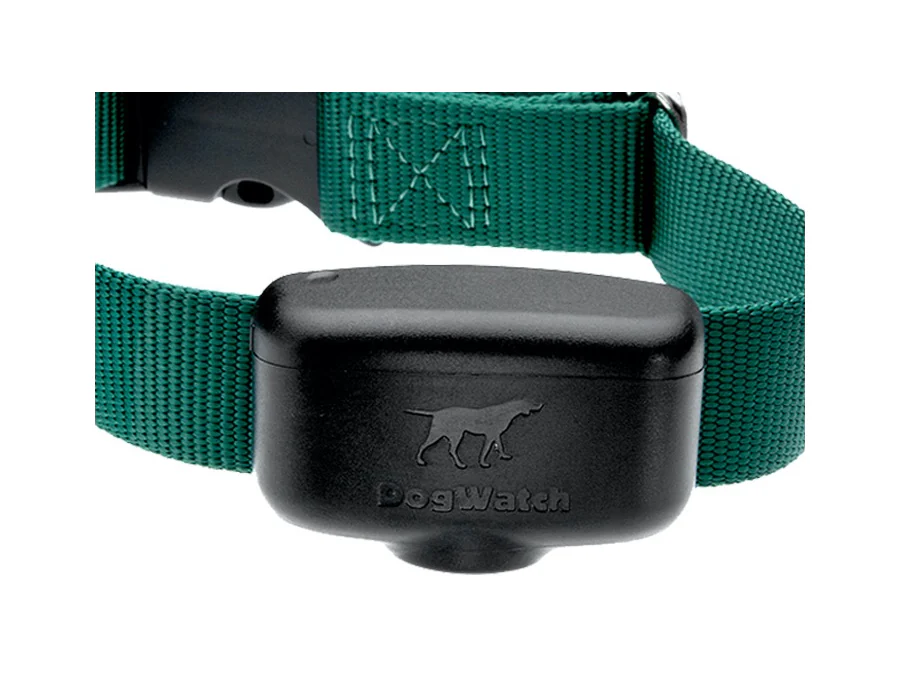
White flags mark the boundary so your dog can see it, and the collar's warning tone sounds on approach. At this stage your dog is only learning where the line is. The goal is for the tone alone to do that job later on.
- 2
Supervised boundary work
Short, on-leash sessions where your dog learns the right response: hear the tone, turn back into the yard. You reward every retreat, so turning back becomes the easy choice.
- 3
Distraction-proofing the boundary
This is where you deliberately introduce the things that tempt your dog: squirrels, delivery drivers, neighbor dogs, a ball rolling past the line. The materials show you how to practice the turn-back until it holds under real pressure. If it isn't holding, that's exactly what the free training help in your first year is for.
- 4
Earned off-leash freedom
Freedom comes in stages: supervised time off-leash first, then longer stretches as your dog proves reliable. By the end the boundary is a habit your dog keeps without thinking about it.
The first week
Short daily training sessions, not a weekend crash course.
Most dogs are trained within about 7 days. Some move faster and some need longer. Your dog decides that timeline, and rushing it undoes the work.
What our training includes
- We run the first session with you there, so you see exactly how it works.
- We set the collar to the lowest level your dog actually responds to.
- You get all the training materials, in plain language, so you can run the daily sessions yourself.
- If training stalls in the first year, we come back out and work on it with you at no charge. That’s the one-year dog containment guarantee.
- You can call or text us any time. A quick message usually answers the “is this normal?” questions.
Your role after the first session
- Run the short daily sessions we show you. Consistency matters more than length.
- Supervise all yard time until your dog has earned off-leash freedom.
- Keep the collar properly fitted, with a working battery, and leave the flags where they are.
- Tell us what you’re seeing (hesitation, testing, boredom) so we can adjust the plan.
Adjusted per dog
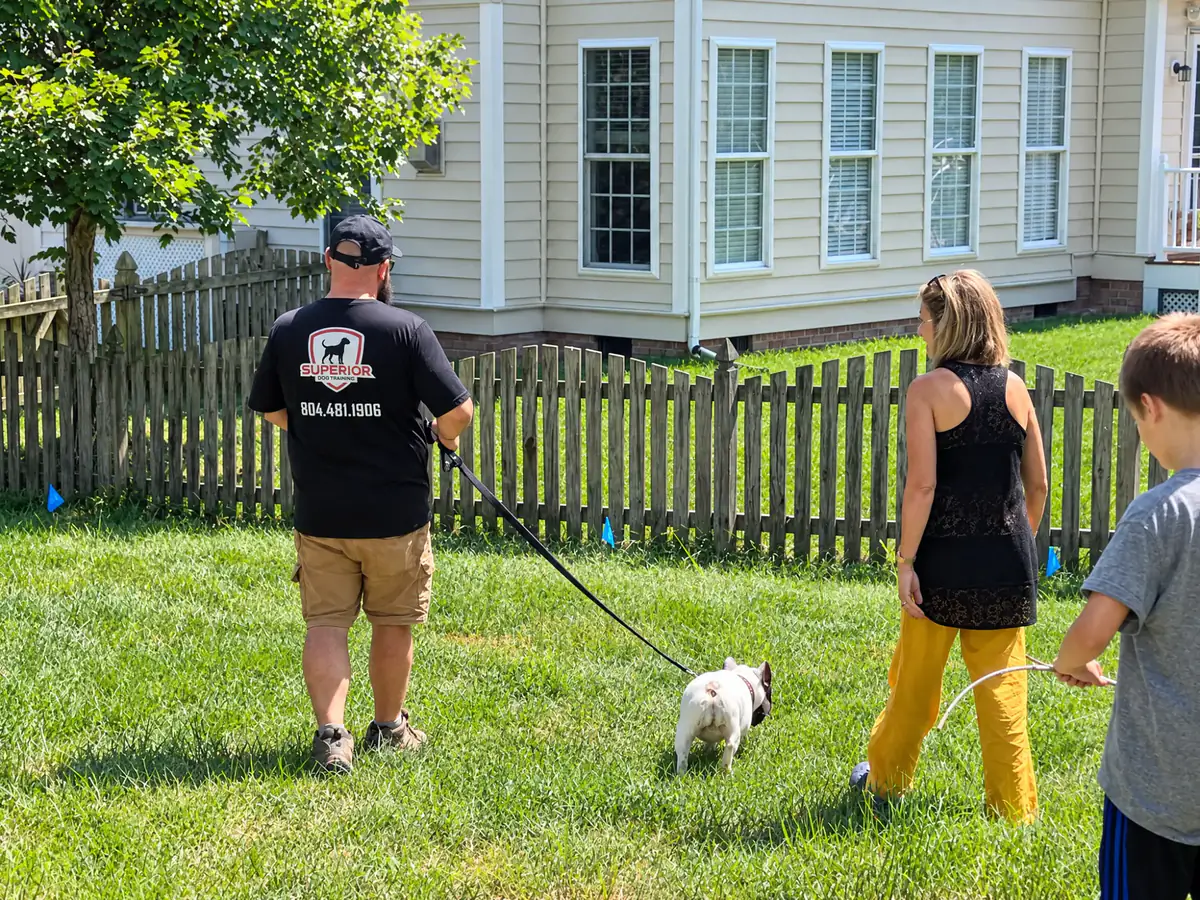
Boundary training flexes to the dog wearing the collar.
Puppy training: when to start
Most dogs can start around 4 to 6 months, once they know basic commands and can focus through a short session. If your puppy isn't ready yet, we'll say so and tell you what to work on first. The age question is answered in full below.
Anxious or soft-tempered dogs
We slow the plan down, build in longer tone-only work, and set the collar to the gentlest level your dog still responds to. The goal is a boundary your dog understands calmly, not one that adds stress to the yard.
High-prey-drive dogs
These dogs get a longer flag phase and heavier distraction work, because a squirrel is a stronger argument than a tone. We'll also give you an honest read on whether a boundary alone is enough for your dog.
Curious how we’d approach your dog? Try the dog-by-dog evaluation on our homepage. Pick your dog’s profile and see what we consider.
How old should a puppy be before boundary training?
Around four to six months for most dogs. The number matters less than what sits behind it, which is whether your puppy can hold attention through a short session and already knows a few basic commands. A puppy who cannot yet sit and stay on request has nothing to anchor boundary work to, and starting anyway usually means doing it twice.
Waiting is not wasted time. Leash work, recall, and the basic commands are the groundwork boundary training builds on, so a puppy who spends two months on those starts further along than one who spends them waiting. Supervised time in the garden helps too, because a dog who already knows the shape of the space learns its edges faster.
Fit is the other reason not to rush. A growing puppy’s collar needs checking as they grow, and a collar that has become loose is not doing what training assumes it is doing.
Four to six months is a readiness floor rather than a window that closes. An older dog is assessed the same way any dog is, on whether this one can learn the boundary. Tell us about your dog and we will say whether now is the right time or what to work on first.
About the flags
What the little white flags mean and when they come down.
They make the line visible
Your dog can't see a buried wire. The flags give the boundary a shape your dog can see and remember while the tone and the training do their work.
They come down gradually
The flags come down a few at a time as your dog shows reliable turn-backs, never all at once and never on a fixed date. We show you when and how, and the training materials cover it. Pulling them early is one of the most common mistakes we get called to fix.
Then the yard looks like a yard
Once your dog is reliable without them, the flags come down for good. You're left with an invisible boundary and a dog who knows exactly where it is.
Included with every installation
The one-year dog containment guarantee.
It’s called a containment guarantee, so here is exactly what it covers: the training. For a full 12 months after your installation, if you’re having trouble getting your dog reliable on the boundary, we come back out and do that training with you at no charge. It is not a promise that your dog will never test the line or get past it, which no honest installer can promise, and it is not a refund. It is the professional help, for as long as that first year lasts, so a training problem never becomes a permanent one.
- 1
We run the first session together, right after the install.
- 2
You get all the training materials and run the short daily sessions from there.
- 3
Any trouble in that first year, call or text. We come out and help, free.
The honest part
We evaluate training dog by dog, and we tell you what we find.
Most dogs do very well with a properly trained boundary. Not every dog does, and not every situation suits one. If your dog’s age, temperament, or history makes a boundary the wrong tool, or the wrong tool for right now, we tell you before you spend money instead of after. It’s the same reason we never promise a dog “cannot” get out. A boundary is a trained behavior rather than a wall, and being straight about that is part of the job.
For the fuller picture of how the correction works and what the system does and doesn’t do, read our honest conversation about safety.
Training questions
Common invisible fence training questions.
How does boundary training work?
Training is progressive: your dog first learns where the boundary is using flags and the warning tone, then learns to turn back from it, then earns off-leash freedom in stages. We run the first session with you on installation day and hand over all the training materials, then you run the short daily sessions. Most dogs are trained within about seven days. If you hit trouble in the first year, the one-year dog containment guarantee means we come back out and help with the training at no charge.
How long does invisible fence training take?
Most dogs are trained within about seven days. Some move faster and some need longer. Your dog’s age, temperament and history set the pace, and rushing it undoes the work. We run the first session with you on installation day and leave you all the training materials for the short daily sessions after that.
How old should a dog be before training?
Most dogs can start boundary training around 4 to 6 months, once they know basic commands and have the attention span for short sessions. We'll assess your puppy honestly rather than rushing it.
What does the one-year dog containment guarantee cover?
It covers the training. For one year after your installation, if you’re having trouble getting your dog reliable on the boundary, we come back out and do that training with you at no charge. It isn’t a promise that your dog cannot get out. A boundary is a trained behaviour, not a wall, and it isn’t a refund. It’s the professional help, free, for the whole first year.
New to the technology? Start with how an underground dog fence works or see what installation costs.
Not sure how your dog would take to training?
Send us your dog's age and temperament, plus anything in their history that matters. We'll give you an honest read on fit and on how long training is likely to take.