
Underground dog fence • How it works
How an underground dog fence works.
A buried wire, a transmitter, a collar on your dog, and a training plan that ties them together. Below is the whole system, from the first sketch of your property to a dog running the yard off leash.

Step 1 of 3
Design the dog fence boundary.
We start with a drawing of your property. Where the wire runs depends on how your household actually uses the yard: the corner the kids play in, the path deliveries take, the spot your dog already spends the day in.
The layout works around driveways, pools, gardens, and wooded edges. Exclusion zones keep the pool deck or the vegetable beds off limits inside the same loop, and on city lots a front-yard-only or back-yard-only layout often fits better than a full perimeter.
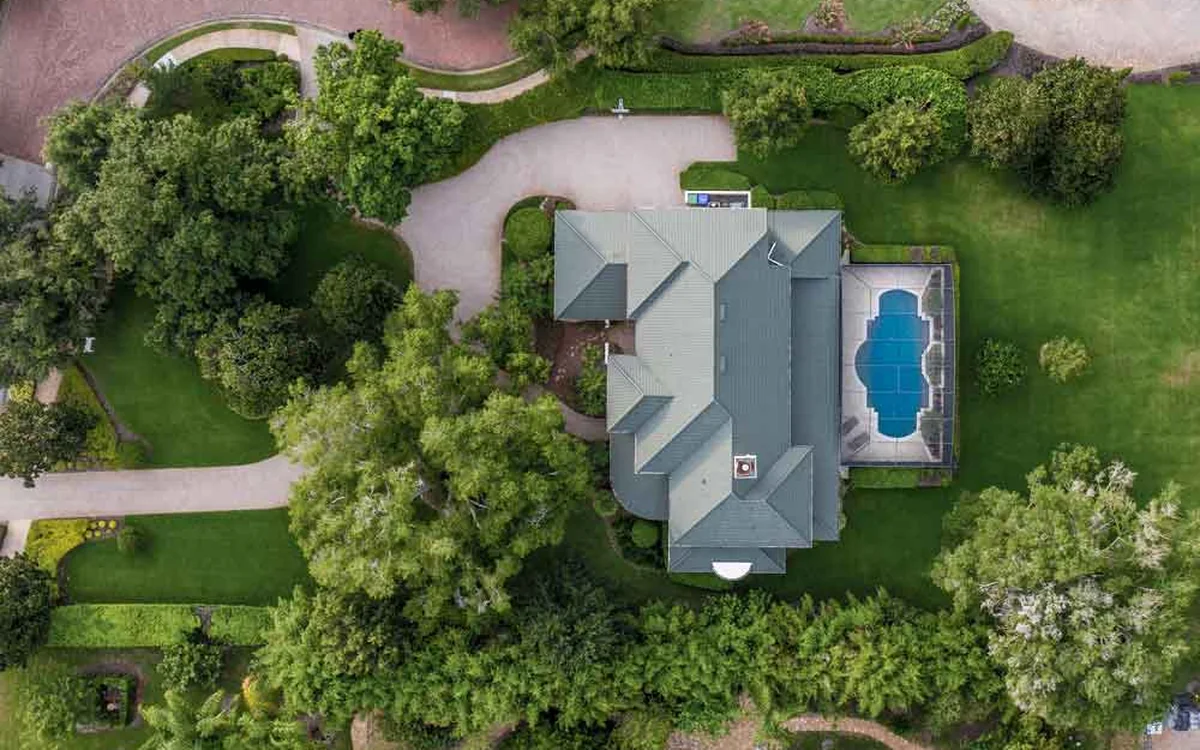
Most estimates start remotely. You describe your dog and your property, we work from aerial imagery, and we confirm details on site when the layout calls for it. Either way, you see the plan and the price before we schedule any work.
A typical layout: perimeter loop, driveway crossing, and dashed exclusion zones around the pool and garden.
Wire crossings at driveways & sidewalks
Crossings are routine. The wire runs through an expansion joint or a clean, sealed cut.
Pools & gardens
An interior exclusion zone keeps the spots your dog should skip off limits, and it runs off the same system.
Boundary wire through wooded edges
The wire routes through tree lines and root systems without trenching damage.
Partial pet containment layouts
Front-yard-only, back-yard-only, or full perimeter: whichever fits the property.
Step 2 of 3
Install the underground dog fence system.
Installation is low impact, and on most single properties it takes a day. Four things happen, in this order:
- 1
Boundary wire goes underground
We bury the wire a few inches down, below mowing and everyday lawn care but shallow enough that the install disturbs very little. Most lawns show almost no trace within a couple of weeks.
- 2
Driveway and hardscape crossings
Where the loop crosses concrete or asphalt, the wire runs through an expansion joint or a clean, sealed saw cut you'll barely see.
- 3
Transmitter and surge protection
The transmitter mounts in a garage or utility space and energizes the loop. Surge protection goes in at the same time, which matters during Virginia summer storms.
- 4
Full-loop test and dog fence collar fitting
We verify signal strength around the entire boundary, then fit the receiver collar to your dog before any training begins.

The transmitter drives the loop and warns you audibly if the wire is ever cut.
Step 3 of 3
Train your dog, then stay supported.
Equipment contains nothing by itself. Training is what teaches your dog where the yard ends. The plan builds in stages, and we spell out your part in it from day one.
Flags mark the boundary line
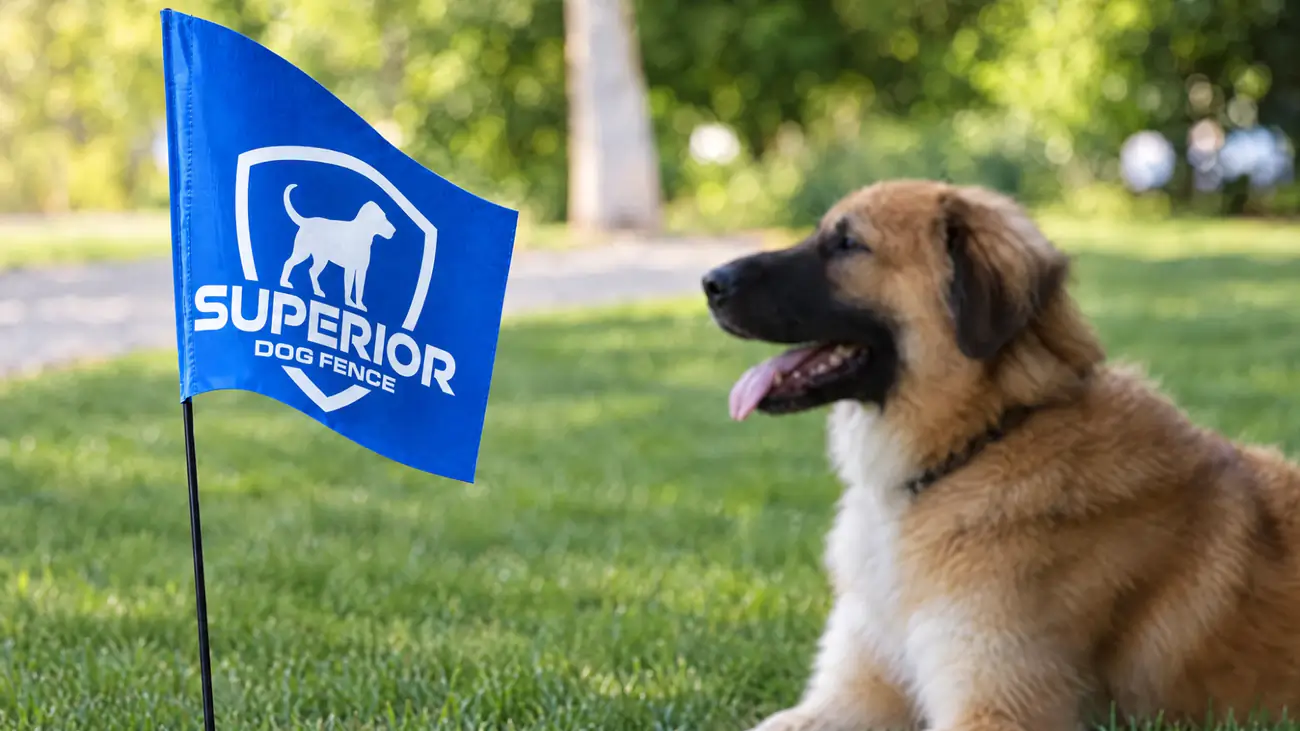
Training flags give your dog a boundary it can see before anything else. They are temporary, and they come down gradually as the boundary becomes habit.
The warning tone comes first
Early sessions teach one association: tone means turn back. Your dog learns the sound of the boundary before ever feeling a correction.
Supervised boundary work
Short on-leash sessions build the habit: approach, hear the tone, retreat, get praised. Repetition does most of the work.
Your dog earns freedom in stages
Off-leash time starts supervised and expands as your dog shows the boundary has stuck. Most dogs are there within about a week, though it varies from dog to dog.
Your role is the daily one
We run the first session with you at the install, then hand over all the training materials. You run the short daily reps from there, and consistency from the household matters more than any setting on the collar. If it isn't going well, our one-year dog containment guarantee brings us back out to work on it with you at no charge.
Follow-up, from the same person
We'll adjust settings whenever you ask, and the one-year dog containment guarantee covers a free training visit for the first year after installation. After the flags come down, your questions go straight to the person who installed the system.
The physics, plainly
What each part actually does.
“Underground fence” makes it sound complicated. It comes down to three parts, each with one job.
The in-ground wire is an antenna
The buried wire is not electrified. The transmitter sends a low-power radio signal through the loop, and the wire broadcasts that signal a set distance in every direction. That band of signal is the boundary.
The dog fence collar is a receiver
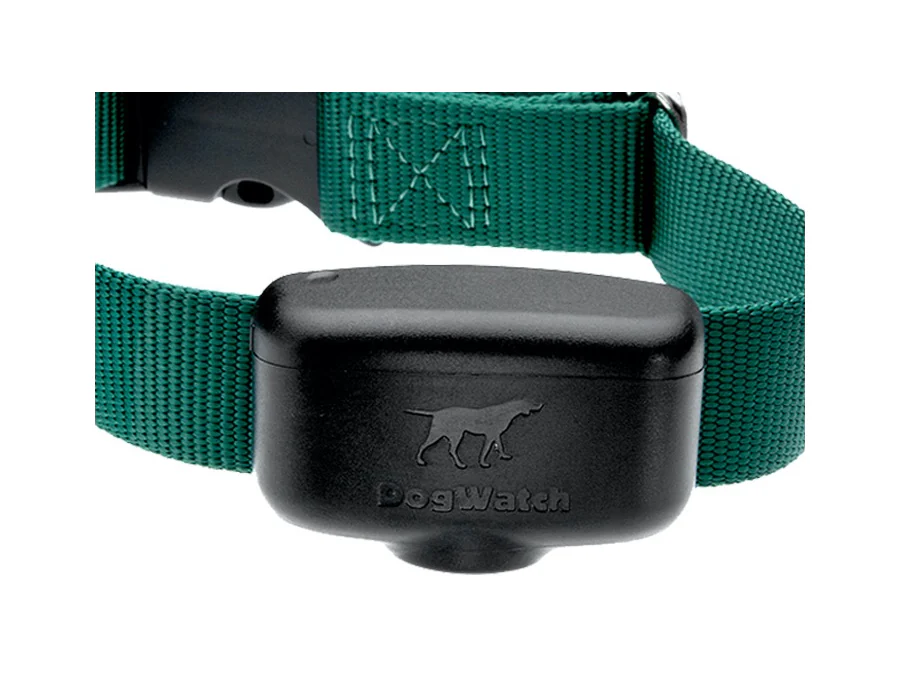
The receiver on your dog's collar listens for the wire's signal. The closer your dog gets to the boundary, the stronger that signal reads, and the collar answers it with a warning tone first.
The correction, honestly
If your dog keeps moving toward the line after the tone, the collar delivers a static correction. It is brief and adjustable, meant to startle rather than to hurt, and the tone your dog learned first always comes before it. We set it to the lowest level your dog responds to.
Whether that is right for your dog is a fair question. We answer it in full on the safety page, and we cover every component on system features.
Common questions
Questions about how underground dog fences work.
How does boundary training work?
Training is progressive: your dog first learns where the boundary is using flags and the warning tone, then learns to turn back from it, then earns off-leash freedom in stages. We run the first session with you on installation day and hand over all the training materials, then you run the short daily sessions. Most dogs are trained within about seven days. If you hit trouble in the first year, the one-year dog containment guarantee means we come back out and help with the training at no charge.
How long does invisible fence training take?
Most dogs are trained within about seven days. Some move faster and some need longer. Your dog’s age, temperament and history set the pace, and rushing it undoes the work. We run the first session with you on installation day and leave you all the training materials for the short daily sessions after that.
How old should a dog be before training?
Most dogs can start boundary training around 4 to 6 months, once they know basic commands and have the attention span for short sessions. We'll assess your puppy honestly rather than rushing it.
What does the one-year dog containment guarantee cover?
It covers the training. For one year after your installation, if you’re having trouble getting your dog reliable on the boundary, we come back out and do that training with you at no charge. It isn’t a promise that your dog cannot get out. A boundary is a trained behaviour, not a wall, and it isn’t a refund. It’s the professional help, free, for the whole first year.
Can several dogs use the same system?
Yes. Each dog wears their own receiver collar, and we adjust the settings per dog. Adding a dog later is straightforward.
Can the boundary cross a driveway?
Yes. Paved and gravel driveways are routine. For paved drives we typically run wire through an expansion joint or a clean saw cut, sealed afterward. You'll barely see it.
Can the system move with me?
The transmitter and collars can move; the buried wire stays. At a new home we design and bury a new boundary and reconnect your existing equipment where compatible.
For the practical side, see what installation includes or pricing details.
Wondering if it would work for your dog?
That depends on your dog and your property, and both are what we evaluate. Tell us about them and you'll get a straight answer.