
Your yard changed. Your boundary can keep up.
Expand or redesign your dog fence boundary.
A buried boundary isn’t fixed in place. When you add a pool or a patio, take a fence line down, or open up more yard, we splice in new loop sections, retest the whole system, and retrain the zones that moved.
Why boundaries change
Common reasons to expand a dog fence boundary.
New landscaping or hardscaping
When a patio, walkway, or retaining wall lands on top of the old wire path, the loop reroutes around the new construction.
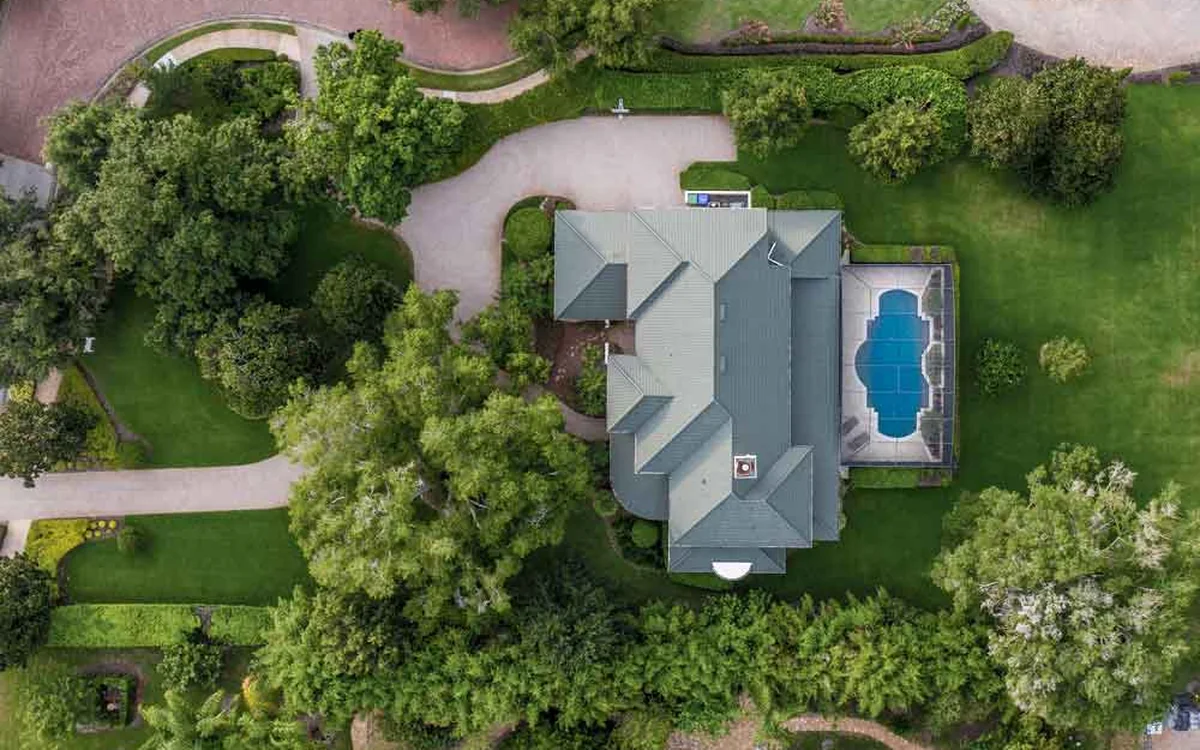
A new pool
The pool deck usually needs an exclusion zone of its own rather than a nudged perimeter.
A home addition
Construction near buried wire is a common cause of damage. It's also a good moment to redesign the loop around the new footprint.
New garden beds, new exclusion zones
Vegetable gardens and prized plantings can come off-limits without shrinking the rest of the yard.
A physical fence moving or coming down
When a fence line shifts or disappears, the invisible line takes over or moves with it.
More yard to give
Opening up a wooded section or an unused side yard is one of the happiest calls we get.
The process
How a boundary expansion actually works.
An expansion is a real installation in miniature, with the same wire, the same splice standards, and the same testing. It adds one step people forget: the dog has to relearn the parts that moved.
- 1
Locate and map the existing boundary wire
We trace the current wire path first, so the new design starts from what's actually in the ground rather than from memory.
- 2
Design the new shape with you
We walk the property together and settle the new line around the pool, the addition, the gardens, or the newly opened ground.
- 3
Splice in the new boundary wire
New wire ties into the existing loop with waterproof splices, buried to the same depth standards as a new installation.
- 4
Retest the entire loop
We verify signal strength around the whole boundary, not only the new stretch, before any dog goes near it.
- 5
Retrain the changed zones
Dogs learn places, not maps. Flags go back up where the line moved, and short refresher sessions teach the new limits.
Inside the loop
Exclusion zones reshape the inside of the boundary.
Expansion isn’t only about a bigger perimeter. Interior exclusion zones keep the pool deck, the vegetable garden, or a new play structure off-limits while your dog keeps the run of everything else. It all runs on the same system, the same collar, and the same training language.
If you’re already having us out to move the line, it’s the most efficient time to add one.
We expand underground dog fences we didn’t install.
We expand and reshape boundaries installed by other companies too, as long as the wire and transmitter test serviceable. We evaluate the existing system first, the same way we would for any upgrade, then tell you honestly if it’s worth building on.
Boundary questions
Common boundary expansion questions.
Can the boundary cross a driveway?
Yes. Paved and gravel driveways are routine. For paved drives we typically run wire through an expansion joint or a clean saw cut, sealed afterward. You'll barely see it.
Can the system move with me?
The transmitter and collars can move; the buried wire stays. At a new home we design and bury a new boundary and reconnect your existing equipment where compatible.
Can you keep a dog away from a pool or garden?
Yes. Interior exclusion zones let your dog roam the yard while keeping the pool deck, vegetable garden, or flower beds off-limits, all on the same system.
Curious how the retraining side works? See our boundary training approach.
Planning a yard project? Loop us in early.
Tell us what's changing in the yard: a pool, a patio, an addition, a fence line. We'll tell you how the boundary should change with it, and give you a clear number first.