
Yard & boundary planning • Richmond, VA
Planning an underground dog fence layout.
The equipment is much the same on every job. The layout is not, and it is the part that decides whether the system suits how your family actually uses the garden. This covers how deep the wire goes, the four layouts most properties land on, and the decisions we will ask you to make on the walk round.
The same yard, three ways
One property, three boundaries. Which one suits yours depends on the road, the driveway, and where you actually want the dog to be. Most properties are a variation on one of these.
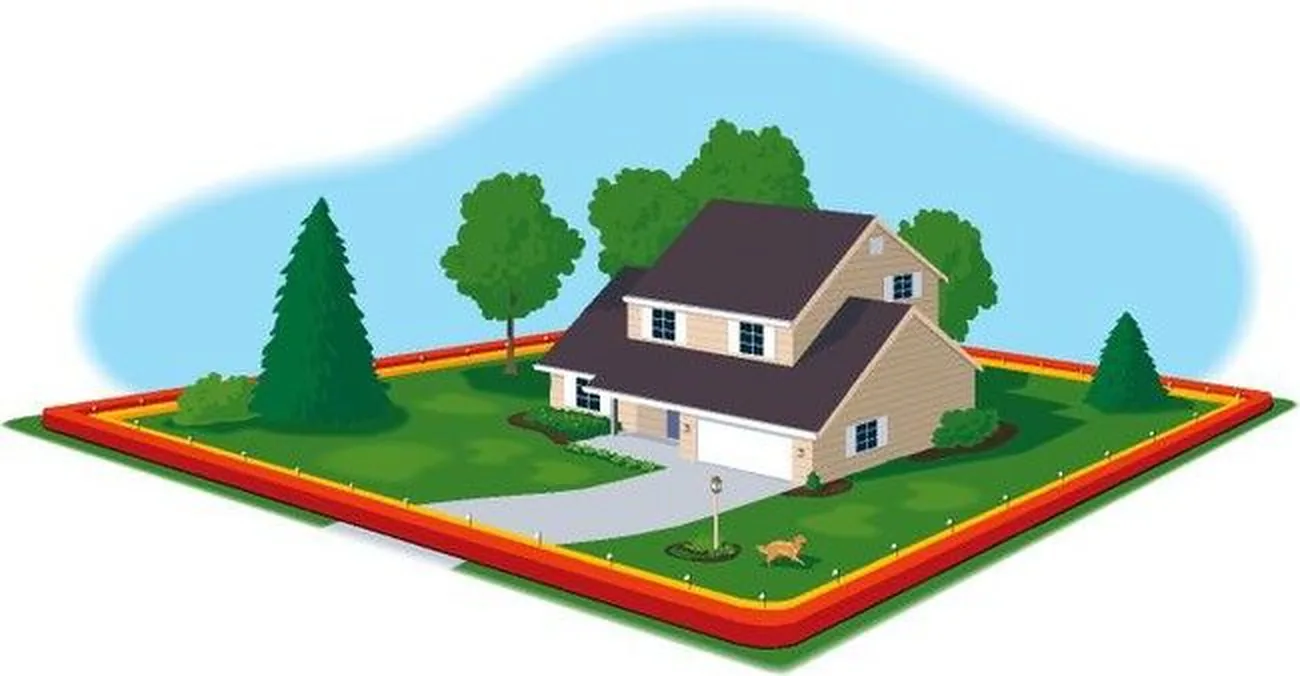
The wire follows the whole property line. The commonest layout, and the one most estimates start from.
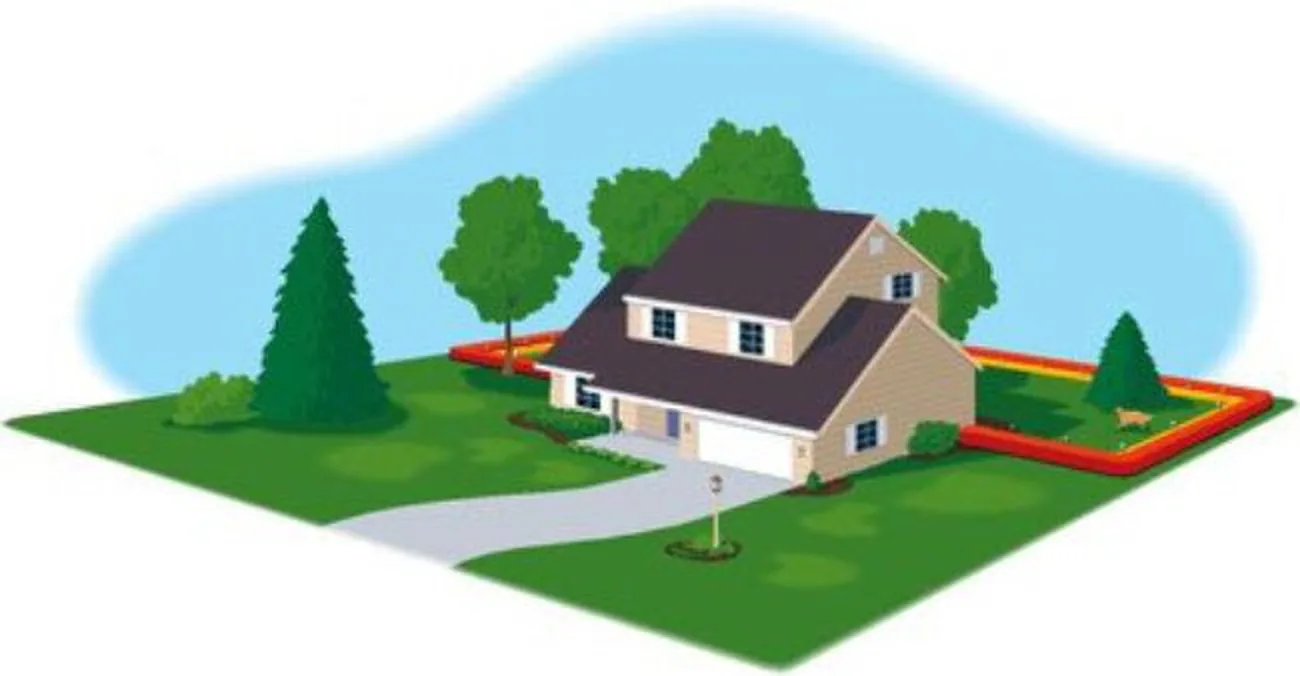
The rear of the property is enclosed and the front lawn is left outside the boundary.
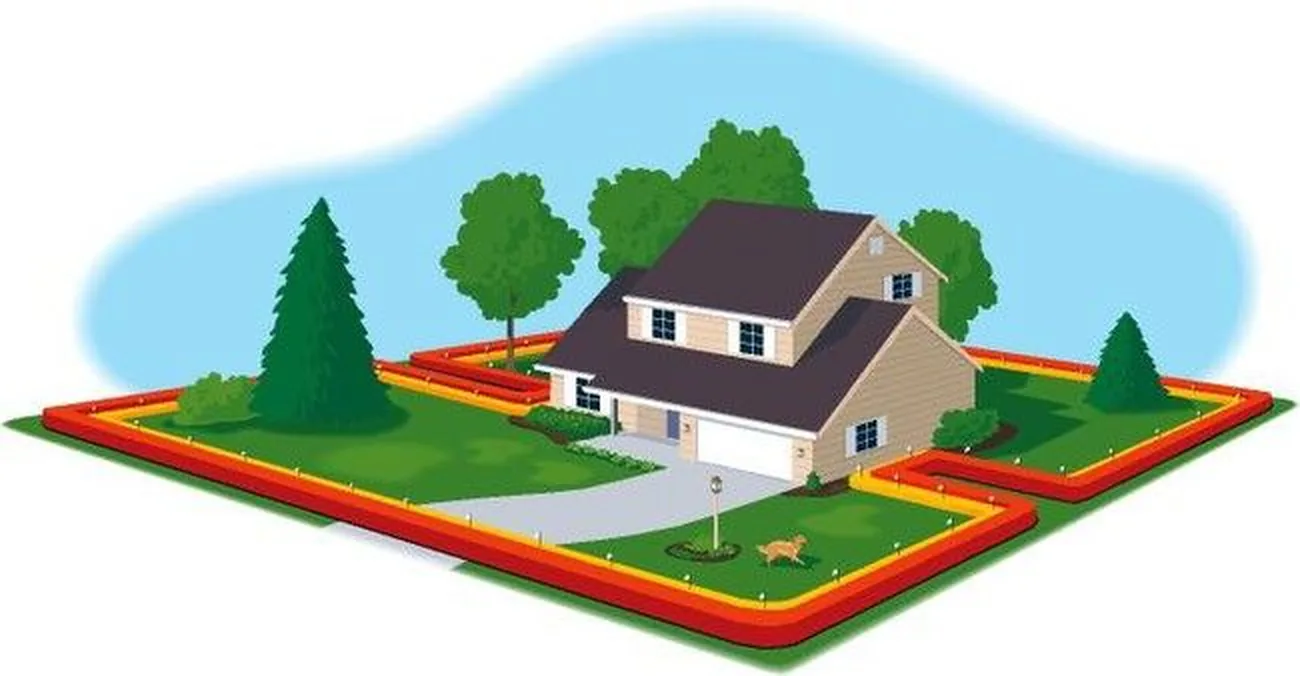
A perimeter loop plus a second interior zone: a pool, a vegetable bed, a section of the yard the dog stays out of.
How deep the wire goes
Three to five inches, and that is on purpose.
The boundary wire is buried three to five inches down. People expect deeper, and the shallow depth surprises them. It is enough to keep the wire below the mower, the aerator and ordinary garden work, and shallow enough that a cut can be found and repaired without excavating your garden to do it.
The trade is worth knowing before you buy rather than after. At that depth, anyone who puts a trencher through your garden can go through the line: a broadband install next door that crosses the easement, a new irrigation zone, a fence post, a tree coming out. It is one of the more common repairs we get called for, and it is almost never the homeowner’s doing.
Which is the practical reason to care where the line runs: we plan the route around what is already under your garden, and you end up knowing where it is. When someone else digs later, that knowledge is what stops a two-day outage.
What we ask about before we dig
- Where the irrigation lines and sprinkler heads run, if you have them
- Septic field and well locations, on properties that have them
- Invisible utilities in the easement: gas, broadband, electric to a shed or a lamp post
- Anything you have buried yourself, which is the one nobody remembers until the trencher finds it
- Where you are planning to build: a patio, a pool, a shed pad, a new bed
The last one matters more than it sounds. Routing the boundary around a patio you are putting in next spring costs nothing today and saves a repair call later.
Four layouts
Most properties land on one of these.
Each one comes with a decision that is yours rather than ours, and each of those decisions is easier to make in the garden than on a phone call.
The full perimeter
The whole property inside one loop. It is the simplest layout and the one most people picture, and on an interior lot with neighbours either side it is usually right.
What you decide: The decision is the setback at the road. Running the boundary to the property line puts the warning zone at the kerb, which leaves a dog no room to turn around. Pulling it back gives them space to hear the tone and stop while still on grass.
The partial yard
Back garden only, or back plus one side. Common on city lots in and around Richmond, where the front garden is small, unfenced and a few steps from traffic.
What you decide: The decision is what happens at the house corners, because the loop has to close somewhere. Running it against the building line is tidy; running it a few feet out keeps the dog off the front path when the door opens.
Exclusion zones
An interior loop that keeps one area off limits inside the main boundary: the pool deck, the vegetable beds, a koi pond, a workshop with the door open all summer.
What you decide: The decision is how big to make it. A tight ring round a pool teaches a dog to squeeze past the edge of it; a generous one is easier for the dog to read. Note that an exclusion zone is a training boundary and not a pool barrier, so it does not satisfy pool-barrier code. Where code requires a physical barrier you still need the physical barrier.
Irregular and wooded edges
Properties that back onto woods, a creek, a ravine, or a neighbour's field. The line that matters is rarely the surveyed one.
What you decide: The decision is where the dog should actually stop, which on a wooded lot is usually short of the treeline rather than at it. It keeps the dog in sight, keeps the wire out of the worst of the root systems, and leaves the deer path on the far side of the boundary.
The bits people forget
Four things worth settling before the wire goes in.
The way you actually leave the house
If the boundary crosses the path from your door to the car, your dog learns that the route to every car journey runs through a warning zone. Walk the layout the way you use the garden, not the way it looks on a plan.
Where the post and the parcels come
A delivery driver walking to your door is the most predictable daily event on the property. A boundary that puts an excited dog and a stranger in the same few feet is worth redrawing.
Driveway crossings
Crossing concrete or asphalt is routine: the wire runs through an expansion joint or a clean, sealed cut. What is worth deciding is how many crossings the layout needs, because a route that crosses the drive once is simpler to repair than one that crosses it four times.
The neighbour's dog
Two boundaries meeting along a shared line is fine. A boundary that stops your dog exactly where the neighbour's dog waits on the other side of a chain link is asking for a fence fight. A few feet of setback solves it.
Layout also moves the price, because the number that matters is the length of the loop and the number of hardscape crossings. The cost guide explains how, with installations starting at $1,399.
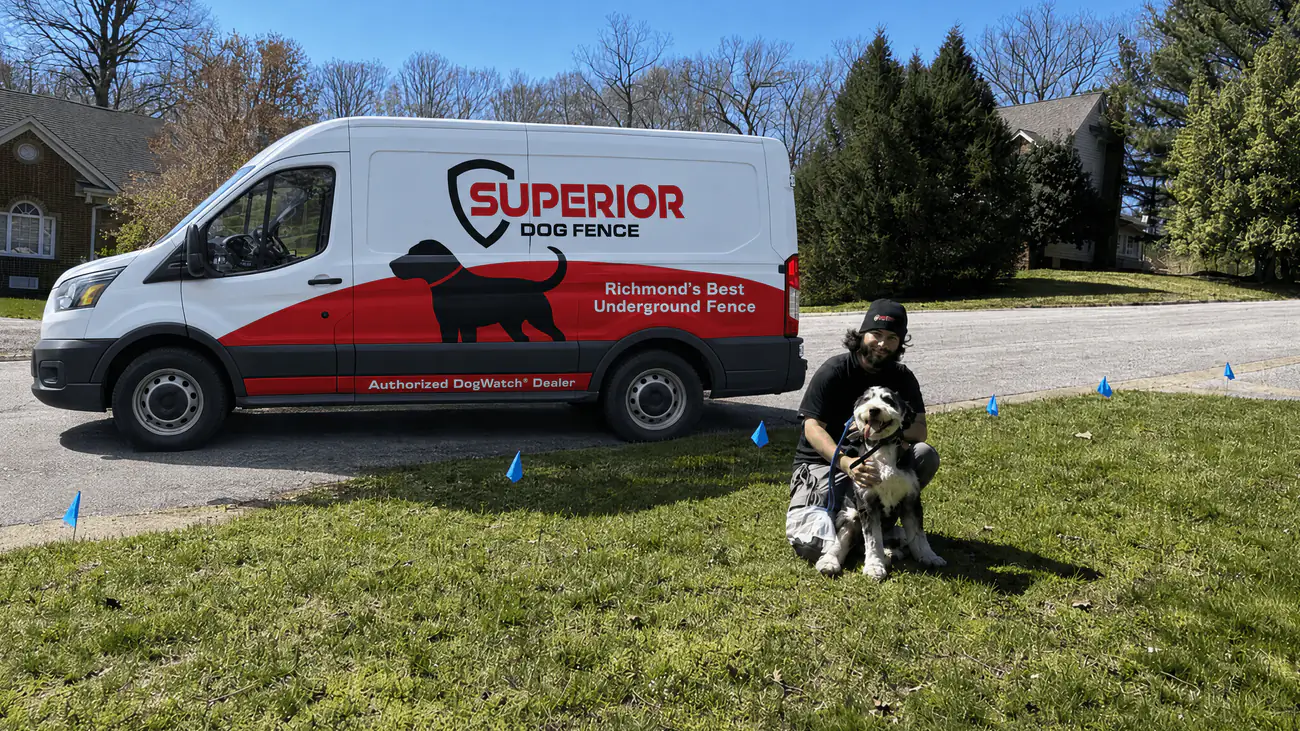
We'll walk your property and draw the layout with you.
Bring the awkward parts: the pool, the creek, the drive that crosses twice, the bit of garden you would rather the dog stayed out of. That conversation is the estimate.